 |
 |
 |
| Majon
University 325 Independencia Trujillo, Peru Tel: 51949924252 E-mail: info@majonuniversity.com |
|
|
|
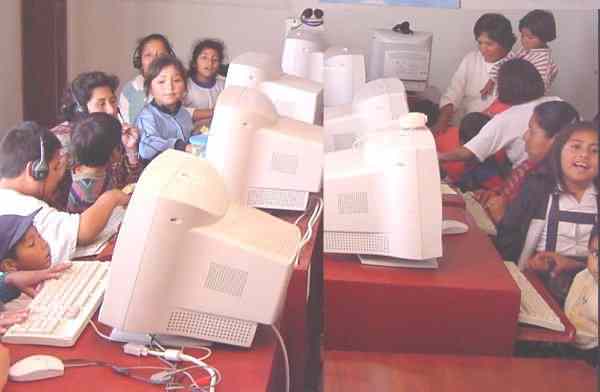
VIRTUAL LEARNING CENTER FOR STREET CHILDREN |
| The poorest children normally live in countries with the poorest economies. Internet Business (electronic commerce) in most cases does not depend on the local economy for its success, but rather sells to the rich world and repatriates profits for use in the local economy. |  |
- The skills required to exploit the internet for
commercial purposes are easily grasped by most people, and do not require
a strong educational foundation for success (unlike most other
professions). The principal requirement is that the people training the
students are experienced e-commerce practitioners (of which there are
still but few in this new industry), not merely educated theorists (of
which there are already too many, misleading many).
A -The founders of the free university are recruiting and training
teachers for the first matriculation of students. Future teachers will be
drawn from the student body.
B - Initial resources for the free
university are provided by the founders. It is envisioned that future
support will come from the proceeds of school-operated e-commerce
projects; through donations from internet and computer companies willing
to help demonstrate the universality of e-commerce, and from overseas
NGOs.
C - The curriculum of the free university will be divided
between classroom and computer laboratory instruction on the one hand, and
apprentice-style on-the-job training on the other, in which students
participate in real time school sponsored e-business projects.
Certificates of competence and/or university degrees (pending Regents
acceptance of the university’s credentials) will be awarded on a
performance rather than a calendar basis. The best students will be
awarded certificates before the others and will be invited either to join
the teaching staff or else to join the university as associates in one or
more e-commerce projects. Considering the young age of most matriculating
students, the university will also offer, along with e-commerce courses
and training, the standard curriculum available to students in a public
school environment. This will be delivered through a combination of
internet-accessed on-line instruction (virtual education) and live
teachers
 |
 |
 |
 |
|
|